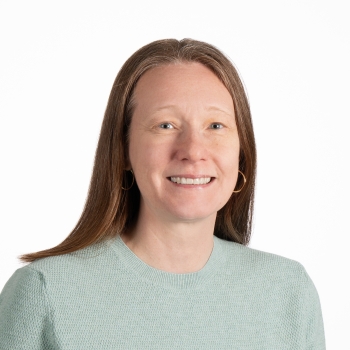
Lynn Pierson
Director, Community Engaged Leadership, Learning & Research
Your Impact
We are deeply grateful for the Douglas K. Candland Fund for Civic Action that enabled Bucknellians and local community partners to engage in opportunities that fueled their motivation and passions. This support helped The Center for Community Engaged Leadership, Learning and Research (CCELLR) create opportunities with a positive impact on our regional community beyond campus, strengthening our collaboration with community partners on locally identified priorities, particularly in health-related areas.
The Douglas K. Candland Fund for Civic Action is crucial for supporting key initiatives at Bucknell, including the Community Impact Internship program, which provides valuable experiences for students. Additionally, the fund supported SHECP Interns and enabled the hiring of a faculty fellow, the development of a minor, and the development of community-engaged courses.
Moreover, the fund provides wages for students who are either ineligible for work-study or have exhausted their award but are eager to participate in community work, and are utilized for purchasing necessary software and providing professional development opportunities. The following initiatives are made possible through the generous support of this fund:
Summer Community Impact Interns
CCELLR partnered with three local organizations for a new summer internship experience in summer 2024 to hire four Bucknell students as Community Impact Interns. These community-based internships
aimed to assist the partners with on-site tasks and collaborate on key community priorities while providing interns with hands-on learning experiences focused on housing security and mental health and food security. The Bucknell interns worked for eight weeks in May, June and July, engaging with the local community through specific roles defined and supervised by the partner organizations. This experience helped them gain insights into the root causes, systems and resources in the area, fostering a deep understanding of local priorities identified by community partners. The interns made a significant impact on our local community at their partner sites by supporting on-site tasks, which included assisting with community distributions of food, furniture and household goods, providing marketing support, managing hotline assistance and translating materials and services for Spanish-speaking community members. This program was completely supported by the fund.
The summer 2024 interns:
- Ralf C. ’25, DIG Furniture Bank (featured in photo)
- Elmer C. ’25, Union County Food Hub
- Michael H. ’25, Union County Food Hub
- Jahnia T. ’25, Transitions
Community Engagement Training
Annually in May, faculty and staff have the opportunity to join a multi-day training focused on community engagement. Faculty members who participate are interested in teaching a community-engaged learning or community-based learning class. For staff, this training gives them the foundation to create, lead and participate in the many community engaged activities the local area offers. The training covers various topics such as assessment, curriculum development, best practices in community engagement, equity and inclusion and in-depth exploration of the local area. Participants, including faculty and community partners, receive compensation in the form of a stipend for their involvement.
We have also held an Engaged Departments Institute that invited academic departments and other administrative units to gather for two days in September 2021 with the staff of CCELLR to expand their missions to include integrating public meaning and common purpose into our educational institution. Participating departments include math, psychology, civil and environmental engineering and language, cultures and linguistics. The Bucknell Samek Art Gallery and Bucknell Weis Center for the Performing Arts also participated, as well as community partners. Academic departments received a small budget to implement the work they identified during the workshop.
In the intervening three years this collaborative work has resulted in substantive outcomes in each of the participants’ departments and also transformed the understanding of community engaged work into one that is far more deeply embedded into the departmental mission statements and review documents. For example, the Department of Languages, Cultures and Linguistics now offers regular community engaged classes in French at the Lewisburg Children’s Museum, and engages elementary school students annually with cultural exchanges with our Foreign Language Teaching Assistants.
The review criteria for retention and tenure now also include community engaged teaching as an example of high impact practice. The Department of Civil and Environmental Engineering is also considering the inclusion of similar language into their review guidelines. These efforts have resulted in a significant increase in the type of courses for our community engaged and community based courses. Each year approximately 700 students enroll in one or more community engaged courses. The fund supported these workshops and resulting courses.
Participants from summer 2024:
- Theo Hopper, Emmitt Memorial Assistant Teaching Professor of Biomedical Engineering
- Sara Stoudt, Assistant Professor of Mathematics, Ecological Statistics
- Renea Diamond, Instructional Assistant Languages, Culture, and Linguistics
- Gabriela Diego, Assistant Professor of Practice in Markets, Innovation & Design
- Nicole Warnock, Adjunct Instructor of American Sign Language (ASL) and Deaf Culture
Inside Out Classes
The Douglas K. Candland Fund for Civic Action supports us in offering “Inside Out” classes. ENCW 210, Poetry - Inside Out is an inclusive model of teaching with equal numbers of incarcerated (“Inside”) and college degree-seeking (“Outside”) students in a semester-long class together, taught inside the carceral institution. Additionally, Bucknell instructors must secure permission from the carceral institution’s administration, interview Outside students to ensure their genuine interest in the experience, and work with prison authorities in the selection process of the Inside students.
For this particular class, there were 16 total students, half of whom were Insiders and the other half were traditional Bucknell students. In this particular course, funds paid to print a booklet of poems the students wrote as their final project. The funds have in the past and currently paid for faculty to attend the Inside Out training through Temple University, which allows them to teach this pedagogy. The Candland Fund has also been used to purchase course textbooks.
SHECP Summer Internship
The Douglas K. Candland Fund for Civic Action supported students participating in the Shepherd Higher Education Consortium on Poverty (SHECP) Summer Internship. The SHECP is dedicated to fostering an in-depth understanding of poverty as a multifaceted social issue among college students across various disciplines and career paths. Established in 2011, SHECP has brought together nearly two-dozen member institutions to engage students in a comprehensive educational initiative that combines rigorous academic study with practical, experiential learning opportunities.
This internship is designed to be one component of a curricular and co-curricular education in understanding and addressing the causes and consequences of poverty and inequality while respecting the dignity of every person.
Summer 2024 interns:
- Dani K. ’27
- Katie S. ’26
- Surrender A. ’27
- Jack R. ’27
- Daniela P. ’25
Community Service Federal Work-Study Program
Community Service Federal Work-Study Program
The Community Service Federal Work-Study Program at Bucknell connects nonprofit organizations with eligible students who can work within their organization. These students are paid from federal grant money and contribute to specified tasks that benefit local residents or the public good. Typically, eligible students receive $2,000 per year for their work at community sites.
Some students are so actively involved that they reach their award limit before the academic year ends. In such cases, the Douglas K. Candland Fund for Civic Action allows continued compensation for their work. Moreover, the funds enable hiring of students who aren’t eligible for work-study but are eager to engage in community work. One student benefiting from this opportunity is Zane H. ’26. Zane has demonstrated leadership in campus voter engagement during the past academic year and continues his impactful contributions this year as well.
This fund also allowed CCELLR to present our work alongside community partners this year at multiple national conferences. Listed below are the presentations:
- Sticks and stones may break my bones and words have an impact, Campus Compact24. Denver, CO, June 2024 . Presented by Susan Jordan, Susquehanna Valley Mediation Center, Lynn Pierson, Sarah Farbo and Dr. Katie Faull, Bucknell University
- Description: The session will cover a brief history of the language and terminology in our field so participants gain an understanding of how it has evolved over time. This session will include information and activities that will assist in unlearning language that keeps us from equitable community work and partnerships. The activities will include free write, think pair share, small group discussions, large group brainstorming and role-plays. In addition to discussion about field terminology, strategies for engaging in uncomfortable conversations will be shared. We are including a focus on uncomfortable conversations because we know that sometimes there is a disconnect between the progression of the language in academia and the reality of where communities are. We want to provide strategies on how to navigate that through building relationships with dignity and respect and meeting communities where they are at. Some of the terminology that we will discuss includes the evolution from “community needs” to “community priorities”, “service” to “engagement” and “service learning” to “community engaged learning”, among others.
- Promoting Rural DIG(nity) with Students and Sofas!, ITGA City & University Relations Conference. Baltimore, MD, June 2024. Presented by Emily Gorski, DIG Furniture Bank; Lynn Pierson and Sarah Farbo, Bucknell University.
- Description: Through an interactive session, participants will understand the partnership between Bucknell University and DIG Furniture Bank (DIG). This session will highlight the importance of collaboration in a rural setting around community-identified priorities. A key focus will be on service provision through the lens of humility and dignity, and how critical reducing barriers is in building and maintaining equitable partnerships in order to best provide services to residents. Bucknell and DIG have been working on their learning around DEI and how to provide training and development for volunteers, students and stakeholders to challenge implicit bias and engage in better understanding of individual humanity. We strive to educate around cycles of poverty, root causes of poverty and breaking down the false narrative that “individuals making bad decisions” leads to poverty.
- Fab Food Collabs: Building Effective Collaborations for Food Security, ITGA City & University Relations Conference, Baltimore, MD, June 2024. Presented by Rachel Herman, Union County Food Hub; Theresa Dollar and Irene Hu, Bucknell University.
- Description: Food Hubs are key connectors in the community, acting as an intermediary organization that collect, organize and distribute food from local farmers and producers to those who want it. This session will discuss the fundamentals of Food Hubs and focus on the partnership between the Union-Snyder Food Hub and Bucknell University to address food insecurity in the SUN area.
New Minor: Community Engaged Leadership
The Community Engaged Leadership minor at Bucknell launched this fall, providing students with a unique opportunity to leverage the institution’s liberal arts environment and robust culture of community engagement and leadership development, encompassing both academic and extracurricular programs.
Supported by the Candland Fund for Civic Action, this minor aims to foster students’ engagement in coursework and experiential learning that build competencies in community engagement, encompassing both knowledge and skills. Successful completion of the program enhances students’ prospects for further education and employment by recognizing their commitment to community leadership.
The minor integrates various campus-wide leadership opportunities and draws on a wide array of existing academic minors and engaged scholarship courses. Initial topics include fostering self-awareness through personal inventory assessments covering areas such as implicit bias, cultural humility, active listening, communication skills, ethics, conflict resolution, power dynamics, privilege and time management.
Students are also introduced to the complex challenges posed by poverty in different communities, with an emphasis on frameworks like the Social Determinants of Health model and the UN Sustainable Development Goals as metrics for progress.
The minor will continue our growth on campus and with our community partners for community engaged work on a curricular level. As mentioned prior, approximately 700 students a year take one or more community engaged or community based classes, the minor will support more students engaging in this pedagogy. Funds have supported the purchase of books, cost of transportation, speaker stipends and other training materials for a variety of community engaged course work efforts.
Community Engaged Faculty Fellow
CCELLR will welcome a new community engaged faculty fellow, supported by the Candland Fund. The Faculty Fellow will play a key role in civic and community engagement initiatives in teaching and research and work closely with the Director of the Office of Civic Engagement, the Faculty Director of Academic Civic Engagement and the Associate Director for Community Engaged Learning. Responsibilities include: promoting and developing best practices in community-engaged teaching and research in partnership with community organizations, research workshops and other educational and professional development opportunities for faculty and staff, support and promote the Fall 2024 launch of the new Community Engaged Leadership Minor and assist in the development of CEL/CBL course assessment.
Technology
The funding has ensured the campus can continue using the Engaged Bucknell software platform. In early 2023, Bucknell launched Engaged Bucknell, an innovative online platform designed to facilitate and enhance civic engagement across the campus community. This platform serves as a central hub where students, faculty and staff can discover, participate in, and reflect on various community engagement opportunities. It not only connects individuals with local organizations seeking volunteers but also allows these organizations to create and promote engagement opportunities directly through the platform.
Engaged Bucknell supports a streamlined process for students and student organizations to search for opportunities aligned with their interests and availability. They can easily register for activities, track their participation and document their impact through the platform’s integrated reflection tools. This reflective component encourages users to evaluate their experiences and consider the broader implications of their community engagement efforts.
Faculty members also benefit from Engaged Bucknell, utilizing the platform to coordinate service-learning initiatives and track student involvement in community projects. It provides a comprehensive view of student engagement metrics, including impact totals and detailed reflections, which are crucial for assessing learning outcomes and enhancing educational experiences.
Funding also supported the purchase of the Turbo Vote software, which helps Bucknellians vote by providing reliable, useful voting guidance through the sites and apps. It has helped to create Bison Votes, an initiative which represented a collaborative endeavor across university departments. By engaging students not merely as participants but as researchers, planners and implementers, the program aimed to extend its impact beyond the campus, involving the wider community in addition to traditional partners like the League of Women Voters.
This holistic approach leveraged existing student interests and involvement in various issues, fostering a deeper sense of civic responsibility and community engagement. The software has helped us not only meet but exceed our goals of increasing voter registration and voter turn out.
Our Thanks
On behalf of The Center for Community Engaged Leadership, Learning and Research, I extend our deepest gratitude for expanding opportunities for Bucknell students and the extended community through the Douglas K. Candland Fund for Civic Action. We look forward to continuing to grow our efforts and impact thanks to your support.

